
CELEBRITY
YES: NYC Mayor Zohran Mamdani proposes raising taxes on the megarich — a corporate tax that matches New Jersey’s tax rate, and a 2% tax on people who make more than a million a year.

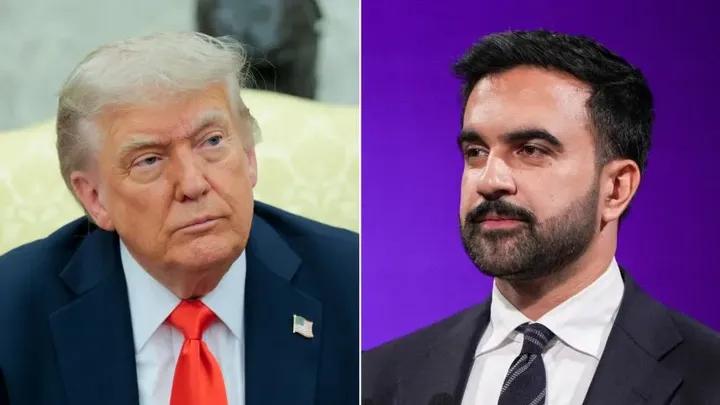
YES: NYC Mayor Zohran Mamdani proposes raising taxes on the megarich — a corporate tax that matches New Jersey’s tax rate, and a 2% tax on people who make more than a million a year.
This will help pay for the massive budget short fall left by previous mayors.
Good.
Do you agree with Zohran Mamdani?
New York City Mayor **Zohran Mamdani** has unveiled a proposal to raise taxes on the city’s wealthiest residents and large corporations, arguing the measures are necessary to protect public services and reduce inequality.
Under the plan, the city would introduce a corporate tax rate aligned with neighboring **New Jersey**, a move Mamdani says would prevent companies from exploiting regional tax differences while ensuring major firms “pay their fair share.” In addition, the proposal calls for a 2% surtax on individuals earning more than $1 million annually.
Mamdani framed the initiative as a response to rising housing costs, strained transit systems, and underfunded public programs. “New York cannot continue balancing its budget on the backs of working families while billionaires and highly profitable corporations see record gains,” he said during a press conference at City Hall.
Supporters contend the tax changes could generate billions in new revenue, which would be directed toward affordable housing development, expanded childcare, and improvements to the city’s public transportation network. Progressive advocacy groups praised the proposal as a long-overdue correction to what they describe as a regressive local tax structure.
Business leaders and some fiscal watchdog organizations, however, warned that higher taxes could drive high-income residents and corporations out of the city. Critics argue that aligning corporate taxes with New Jersey may not eliminate competitive pressures, as companies could still relocate to other states with lower rates.
The proposal faces a complex legislative path, including approval from the City Council and, potentially, state lawmakers in Albany. Political analysts note that tax policy in New York often involves coordination between city and state authorities, adding another layer of negotiation.
As debate unfolds, the plan is likely to become a defining issue of Mamdani’s administration, highlighting broader national tensions over wealth inequality, urban competitiveness, and how cities fund essential services in an era of economic uncertainty.

BREAKING NEWS: Mike Johnson BANS Jasmine Crockett from Speaking — The House REVOLTS and Backs Jasmine Instantly The chamber went silent the moment Mike Johnson slammed his gavel and announced that Jasmine Crockett was “no longer recognized.” Gasps ricocheted across the floor. But before Johnson could move on, members from both sides of the aisle rose in open defiance. Chairs scraped. Voices erupted. And within seconds, the House flipped — not against Jasmine, but against Johnson himself. His attempt to silence her had ignited the biggest backlash of the session. 👉 The sentence Jasmine shouted that turned the entire House to her side, Just 5 five sentence one word…

Clinton said he was there. He has nothing to hide. He was in the pool with girls but he didn’t think they were underage. However, he has enough information and papers on Donald Trump until they can impeach him. They made a big mistake by asking Hillary and Bill Clinton to testify. It may be closed, but the transcripts will be released. Michael Tripp

YES: NYC Mayor Zohran Mamdani proposes raising taxes on the megarich — a corporate tax that matches New Jersey’s tax rate, and a 2% tax on people who make more than a million a year.

When Trump has lost this guy, he’s in real trouble!” President Donald Trump’s authoritarian project is finally running into real headwinds. That doesn’t mean that the danger is passing—far from it, as Trump’s escalating attacks on the voting process in the runup to the mid-term elections illustrate and as his venomous, racist social media posts testify to.

Republicans Demand FCC and Congressional Probe After Bad Bunny Super Bowl Halftime Show


Marjorie Taylor Greene just admitted the Epstein files were blocked by Trump himself. “That fight came directly from President Trump. He fought the hardest to STOP these files from being released.”

BREAKING: THE $1.4 BILLION RECKONING — THE MONEY HAS OFFICIALLY STOPPED FLOWING

Tensions Boil Over as Tom Hanks Unleashes a Blistering Attack** *By Staff Writer


Trump says he’s expecting a full Republican landslide in the upcoming midterms, presenting the prediction with his usual confidence as he outlines what he believes voters want this cycle.
