
CELEBRITY
“When former President Bill Clinton testifies to a congressional committee Friday on the Jeffrey Epstein scandal, he will be setting a precedent that President Donald Trump may come to regret,” writes Stephen Collinson | Analysis

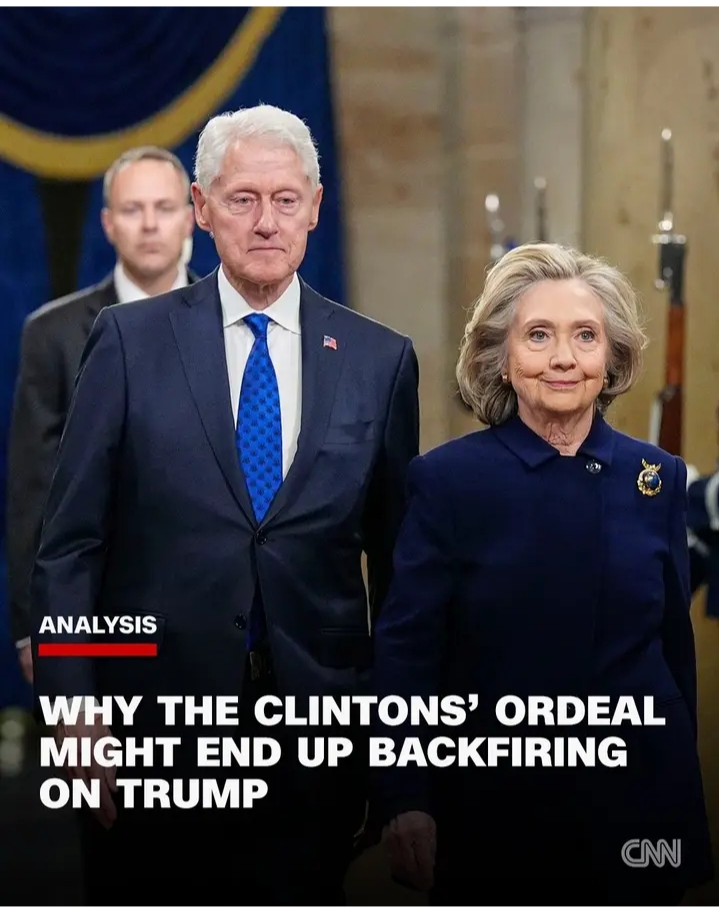
“When former President Bill Clinton testifies to a congressional committee Friday on the Jeffrey Epstein scandal, he will be setting a precedent that President Donald Trump may come to regret,” writes Stephen Collinson | Analysis
When former President Bill Clinton appears before a congressional committee Friday to testify about his past association with disgraced financier Jeffrey Epstein, it will mark an extraordinary moment in modern presidential history — and potentially create a precedent that could reverberate far beyond the hearing room.
Clinton’s testimony, stemming from renewed scrutiny over Epstein’s network and the powerful figures who once moved in his orbit, represents a rare instance of a former president voluntarily submitting to direct questioning by lawmakers in a politically charged investigation. While ex-presidents have provided interviews and documents in past probes, live congressional testimony carries symbolic and political weight that few have embraced.
The implications stretch well beyond Clinton himself. As analyst Stephen Collinson notes, the spectacle of a former commander in chief answering questions under oath may reshape expectations for presidential accountability — particularly at a time when investigations involving another former president, Donald Trump, continue to dominate headlines.
Trump, who has also faced questions about past interactions within elite social circles that overlapped with Epstein’s, has long argued that congressional investigations targeting presidents are politically motivated. Yet Clinton’s decision to testify could complicate that narrative. If appearing before Congress becomes viewed as a norm rather than an extraordinary concession, future officeholders — including Trump — may find it harder to resist similar demands.
At the same time, Clinton’s testimony underscores how the Epstein scandal remains a bipartisan shadow over America’s political and financial establishment. Epstein’s death in federal custody in 2019 did not extinguish public fascination or suspicion surrounding his connections to influential figures across party lines.
For Democrats, Clinton’s appearance carries political risk, reopening uncomfortable questions about judgment and past associations. For Republicans, it presents an opportunity to press for transparency while navigating their own party’s sensitivities around Trump.
Ultimately, the hearing may prove less about the specific details Clinton provides and more about the institutional signal it sends. If a former president can be summoned to publicly account for past relationships, the boundaries that once insulated the nation’s highest office from congressional scrutiny may continue to erode.
In an era defined by polarization and mistrust, Friday’s testimony could mark another step in redefining how power is examined — and who must answer when Congress comes calling.

“When former President Bill Clinton testifies to a congressional committee Friday on the Jeffrey Epstein scandal, he will be setting a precedent that President Donald Trump may come to regret,” writes Stephen Collinson | Analysis

Republicans have just set a new precedent: Congress can now subpoena a former First Lady in connection with Jeffrey Epstein.

U.S. Senators have taken the STUNNING step of officially calling for President Trump’s removal from office under the 25th Amendment…

$1,500,000,000 Cartel Network Exposed in Minneapolis — 3.25 Tons Seized, 2 Judges Arrested

FBI & ICE Raid Minneapolis Aid Group – $300M in Hidden Currency Discovered from Somali’s Director

FBI & ICE Raid Minneapolis Power Couple Mansion — $15M in Dr*gs, $62M in Cash Seized in High-Stakes Transnational Operation

BREAKING: He lied to you about the Epstein files and he lied to you about bringing down grocery prices. He lied about only deporting violent criminals and he lied about those boats in Venezuela carrying drugs.

He tried to block it. Delay it. Seal it. But the judge rejected every argument for secrecy and ordered the evidence released immediately. Private meetings. Internal communications. January 6 connections. As the ruling echoed through the courtroom, one reaction changed everything — 🚨

🚨 TRUMP’S MAGA EMPIRE CRUMBLING – DEVASTATING DEFEAT IN PENNSYLVANIA AS VOTERS SLAM THREE DEMOCRAT SUPREME COURT JUSTICES BACK IN! 😱🔥🇺🇸 THE NIGHTMARE JUST GOT REAL:

Trump’s former UK ambassador to the U.S. Peter Mandelson, was just arrested. And yes, it’s connected to the Epstein fallout, the new document releases: the relationships people swore were “nothing.”
