
CELEBRITY
JUST IN: 🇮🇷 Iran says “there are no red lines anymore.” “Everything is possible now, including responses that were not previously considered.

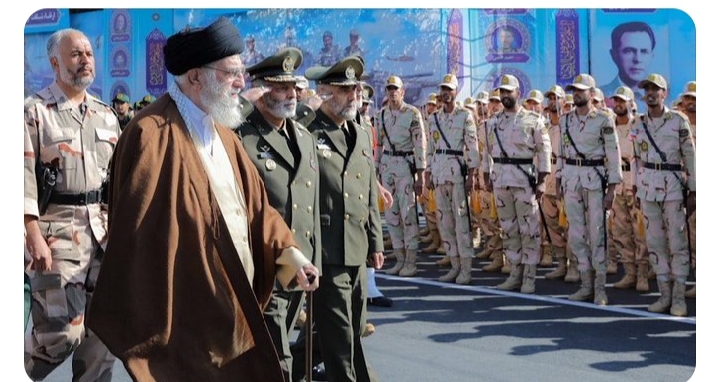
JUST IN: 🇮🇷 Iran says “there are no red lines anymore.”
“Everything is possible now, including responses that were not previously considered.
*February 28, 2026 — Tehran / Middle East* — Senior Iranian officials have signalled an unprecedented shift in Tehran’s stance toward military confrontation, declaring there are “no red lines anymore” in how the Islamic Republic might respond to ongoing U.S. and Israeli military actions.
The comments come amid a dramatic escalation in hostilities that has shaken the Middle East. On **February 28**, the United States and **Israel** launched coordinated air and missile strikes against Iranian military and government targets, in what U.S. President **Donald Trump** described as the initiation of “major combat operations” aimed at degrading Tehran’s nuclear and missile infrastructure. Iran immediately retaliated with drone and missile barrages toward Israeli territory and U.S. forces stationed in the region.
A senior Iranian official told international media that Tehran would no longer restrict its response by previously observed “red lines,” a diplomatic term for limits on military action. “There are no red lines… All American and Israeli assets and interests in the Middle East have become legitimate targets,” the official said, warning that responses once considered unthinkable are now on the table. ([The Guardian][1])
Analysts say this rhetoric reflects both the severity of the current confrontation and Iran’s determination to demonstrate strength after repeated threats and military pressure. Normally, strategic “red lines” help prevent conflicts from spiralling uncontrollably by signalling specific actions that would trigger retaliation. Tehran’s apparent rejection of such constraints raises fears of a wider regional war.
International reactions have been swift. Several Western governments have issued travel advisories and evacuated diplomatic staff, while foreign airlines suspended flights across the region amid growing security concerns. ([Reuters][3]) Meanwhile, indirect nuclear talks between Iran and the United States remain stalled at a critical juncture, with both sides struggling to reconcile deep differences over Tehran’s enrichment program and sanctions relief.
The Middle East now faces a heightened risk of broader instability, as global powers and regional actors recalibrate their positions in response to what many observers describe as the most serious confrontation in decades.

BREAKING: 🇮🇷 Iran vows “crushing response” as Israel and U.S. launch major strikes on Tehran.

JUST IN: 🇮🇷 Iran says “there are no red lines anymore.” “Everything is possible now, including responses that were not previously considered.

“When former President Bill Clinton testifies to a congressional committee Friday on the Jeffrey Epstein scandal, he will be setting a precedent that President Donald Trump may come to regret,” writes Stephen Collinson | Analysis

Republicans have just set a new precedent: Congress can now subpoena a former First Lady in connection with Jeffrey Epstein.

U.S. Senators have taken the STUNNING step of officially calling for President Trump’s removal from office under the 25th Amendment…

$1,500,000,000 Cartel Network Exposed in Minneapolis — 3.25 Tons Seized, 2 Judges Arrested

FBI & ICE Raid Minneapolis Aid Group – $300M in Hidden Currency Discovered from Somali’s Director

FBI & ICE Raid Minneapolis Power Couple Mansion — $15M in Dr*gs, $62M in Cash Seized in High-Stakes Transnational Operation

BREAKING: He lied to you about the Epstein files and he lied to you about bringing down grocery prices. He lied about only deporting violent criminals and he lied about those boats in Venezuela carrying drugs.

He tried to block it. Delay it. Seal it. But the judge rejected every argument for secrecy and ordered the evidence released immediately. Private meetings. Internal communications. January 6 connections. As the ruling echoed through the courtroom, one reaction changed everything — 🚨

🚨 TRUMP’S MAGA EMPIRE CRUMBLING – DEVASTATING DEFEAT IN PENNSYLVANIA AS VOTERS SLAM THREE DEMOCRAT SUPREME COURT JUSTICES BACK IN! 😱🔥🇺🇸 THE NIGHTMARE JUST GOT REAL: