
CELEBRITY
“If Trump intends war, why does he speak of negotiations?” Iran’s armed forces chief Major General Abdolrahim Mousavi said, warning that any battle with Iran would become a “lesson” for the US president and would leave him unable to bully on the world stage.

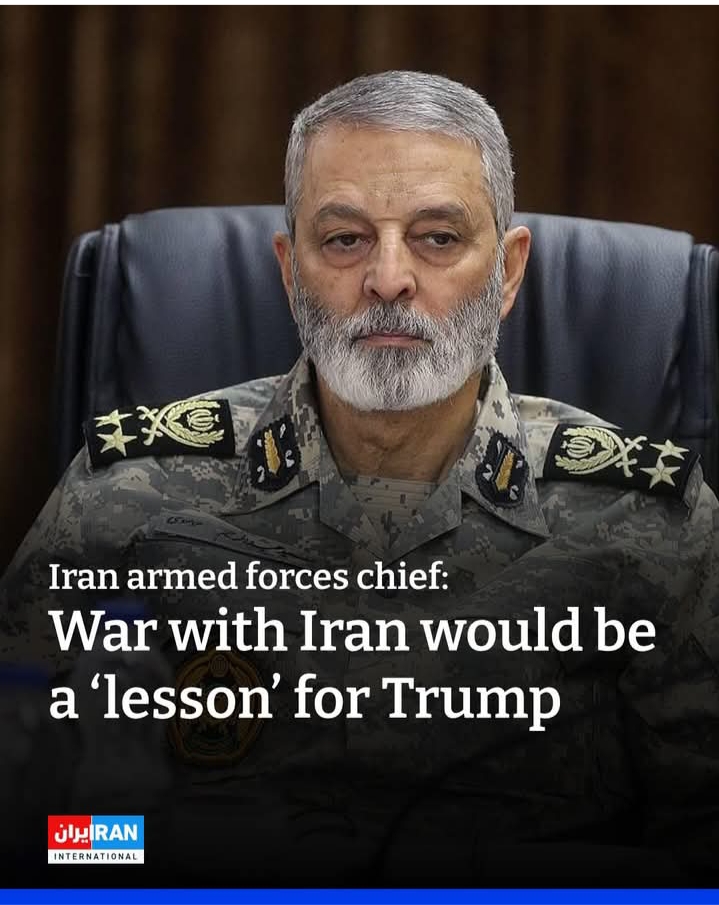
“If Trump intends war, why does he speak of negotiations?” Iran’s armed forces chief Major General Abdolrahim Mousavi said, warning that any battle with Iran would become a “lesson” for the US president and would leave him unable to bully on the world stage.
“He will enter a battle that will serve as a lesson, the outcome of which will ensure he no longer blusters on the world sta
Major General Abdolrahim Mousavi, chief of staff of Iran’s armed forces, has sharply criticized former U.S. President Donald Trump, questioning what he described as contradictory signals between threats of force and talk of diplomacy.
Speaking at a recent military gathering, Mousavi asked, “If Trump intends war, why does he speak of negotiations?” He suggested that Washington cannot simultaneously pursue confrontation while claiming to seek dialogue, framing the mixed messaging as evidence of political maneuvering rather than genuine diplomatic intent.
Mousavi warned that any military conflict with Iran would carry severe consequences. He said a battle would become a “lesson” for Trump and would prevent him from “bullying” on the global stage. The Iranian commander emphasized that Iran’s armed forces are prepared to defend the country’s sovereignty and would respond decisively to any aggression.
The remarks come amid recurring tensions between Tehran and Washington, which have fluctuated between periods of heightened rhetoric and limited diplomatic engagement. While Trump has previously stated that he prefers negotiated agreements over prolonged conflict, Iranian officials have remained skeptical, citing past sanctions and military actions as undermining trust.
Analysts say the exchange reflects a broader pattern of brinkmanship between the two sides, where public statements serve both domestic political audiences and international signaling. Despite the heated language, observers note that both Washington and Tehran have, at different times, indicated that they wish to avoid a direct military confrontation.
Mousavi’s comments underscore the fragile state of relations and the persistent uncertainty over whether diplomatic channels can prevail over escalating rhetoric.

JUST IN: The U.S. Supreme Court rules Donald Trump does not have full immunity and to face a subpoena in the Epstein case, following Bill Clinton’s testimony.

JUST IN; New Epstein File Released Late Last Night By Iran Hackers INCLUDE Donald Trump activities with minors and the disgraced financer

BREAKING: TRUMP’S WORST NIGHTMARE JUST WENT PUBLIC. Washington is rattled as a powerful new alliance takes shape. Governor Gavin Newsom and Senator Mark Kelly are reportedly joining forces in what insiders are calling the most dangerous Democratic pairing heading toward 2028….

JUST IN— 40 MINUTES AGO: Special Counsel Jack Smith has reportedly released materials in his possession linked to Donald Trump, revealing where some of the files may be uploaded. The move is being framed by some observers as a push for transparency and institutional credibility—and it’s already drawing intense reactions across Washington, with figures like Jim Jordan and Donald Trump criticizing the development…

1 MIN AGO: Senate in CHAOS as Trump Faces IMPEACHMENT from Within His Own Party — Trump COLLAPSES!

Attorney General Pam Bondi has moved into military housing after facing growing threats from cartels and irate Americans, according to a new report.

THE UNSEALED TRUTH: Millions of Epstein documents are finally public. This is more than a legal update; it’s a seismic shift in the narrative. From private island communications to meetings that “never happened,” the newly released records are raising questions that can no longer be ignored

Iran Tensions Rise: U.S. AC-130 Gunship Scrambles for High-Risk Mission As tensions involving Iran continue to escalate in the Middle East, the world watches closely. The geopolitical landscape is shifting, and with it comes an increased focus on military readiness and the capabilities of the U.S. Armed Forces.

A new controversy is spreading across global media after human-rights groups accused Israel of using white phosphorus shells in southern Lebanon.

BREAKING: A Republican senator is openly celebrating the departure of Kristi Noem — and he’s now calling for Stephen Miller to follow her out the door…

BREAKING NEWS: The 25th Amendment is officially activated The White House seat is under intense pressure! FULL STORY IN COMMNENT !!!
