
CELEBRITY
President Trump is asking the federal government for billions of dollars in damages, putting his own Justice Department on the spot and creating an unprecedented ethical morass.

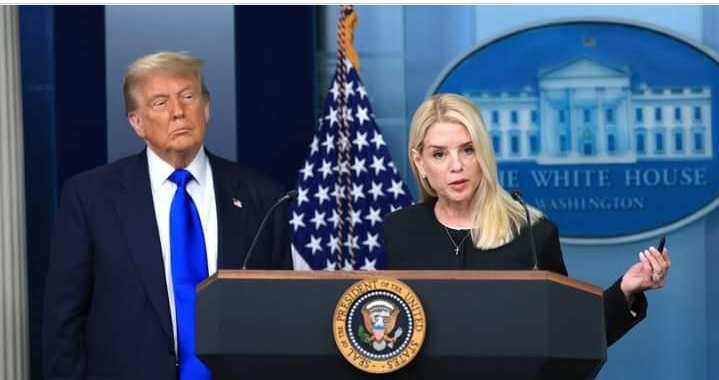
President Trump is asking the federal government for billions of dollars in damages, putting his own Justice Department on the spot and creating an unprecedented ethical morass.
In an extraordinary move that is testing the boundaries of executive power, Donald Trump is reportedly seeking billions of dollars in damages from the federal government — a request that places his own United States Department of Justice in a deeply uncomfortable position.
The claim, described by legal observers as unprecedented, would require the Justice Department to defend the federal government against the sitting president’s own allegations of wrongdoing. At the heart of the matter is a fundamental ethical dilemma: the department is part of the executive branch and ultimately answers to the president, yet it is also tasked with independently representing the interests of the United States government.
Former federal prosecutors say the situation creates a profound conflict. The Justice Department’s mandate is to act in the best interests of the public and uphold the law impartially. If the president pursues personal damages from the government he oversees, career attorneys could find themselves navigating competing loyalties — to institutional norms, to legal ethics, and to the executive authority that appoints their leadership.
Ethics experts note that while presidents have broad legal rights as private citizens, actively seeking financial damages from the federal government while serving in office has no modern precedent. Such a move could require outside counsel, congressional oversight, or judicial intervention to avoid the appearance that the executive branch is both plaintiff and defendant in the same dispute.
The episode underscores long-standing tensions between presidential authority and institutional independence. The Justice Department has historically sought to maintain a degree of separation from the White House in order to preserve public trust. Any perception that it is being drawn into a president’s personal legal battles risks eroding that trust further.
Whether the claim proceeds or stalls, the controversy highlights a larger constitutional question: how far can a president go in asserting private legal claims without entangling the machinery of government in personal interests? The answer may shape not only this dispute, but future interpretations of executive power.

JUST IN: The U.S. Supreme Court rules Donald Trump does not have full immunity and to face a subpoena in the Epstein case, following Bill Clinton’s testimony.

JUST IN; New Epstein File Released Late Last Night By Iran Hackers INCLUDE Donald Trump activities with minors and the disgraced financer

BREAKING: TRUMP’S WORST NIGHTMARE JUST WENT PUBLIC. Washington is rattled as a powerful new alliance takes shape. Governor Gavin Newsom and Senator Mark Kelly are reportedly joining forces in what insiders are calling the most dangerous Democratic pairing heading toward 2028….

JUST IN— 40 MINUTES AGO: Special Counsel Jack Smith has reportedly released materials in his possession linked to Donald Trump, revealing where some of the files may be uploaded. The move is being framed by some observers as a push for transparency and institutional credibility—and it’s already drawing intense reactions across Washington, with figures like Jim Jordan and Donald Trump criticizing the development…

1 MIN AGO: Senate in CHAOS as Trump Faces IMPEACHMENT from Within His Own Party — Trump COLLAPSES!

Attorney General Pam Bondi has moved into military housing after facing growing threats from cartels and irate Americans, according to a new report.

THE UNSEALED TRUTH: Millions of Epstein documents are finally public. This is more than a legal update; it’s a seismic shift in the narrative. From private island communications to meetings that “never happened,” the newly released records are raising questions that can no longer be ignored

Iran Tensions Rise: U.S. AC-130 Gunship Scrambles for High-Risk Mission As tensions involving Iran continue to escalate in the Middle East, the world watches closely. The geopolitical landscape is shifting, and with it comes an increased focus on military readiness and the capabilities of the U.S. Armed Forces.

A new controversy is spreading across global media after human-rights groups accused Israel of using white phosphorus shells in southern Lebanon.

BREAKING: A Republican senator is openly celebrating the departure of Kristi Noem — and he’s now calling for Stephen Miller to follow her out the door…

BREAKING NEWS: The 25th Amendment is officially activated The White House seat is under intense pressure! FULL STORY IN COMMNENT !!!
