
CELEBRITY
Time to revisit the question. With some distance and perspective, do you support Donald Trump’s decision to move against Venezuelan strongman Nicolás Maduro? Supporters argue it was a firm stand against authoritarianism, corruption, and human rights abuses. Critics warn about escalation and foreign entanglements. Either way, it highlights a broader debate about America’s role in confronting dictators abroad. Where do you stand now? 👇

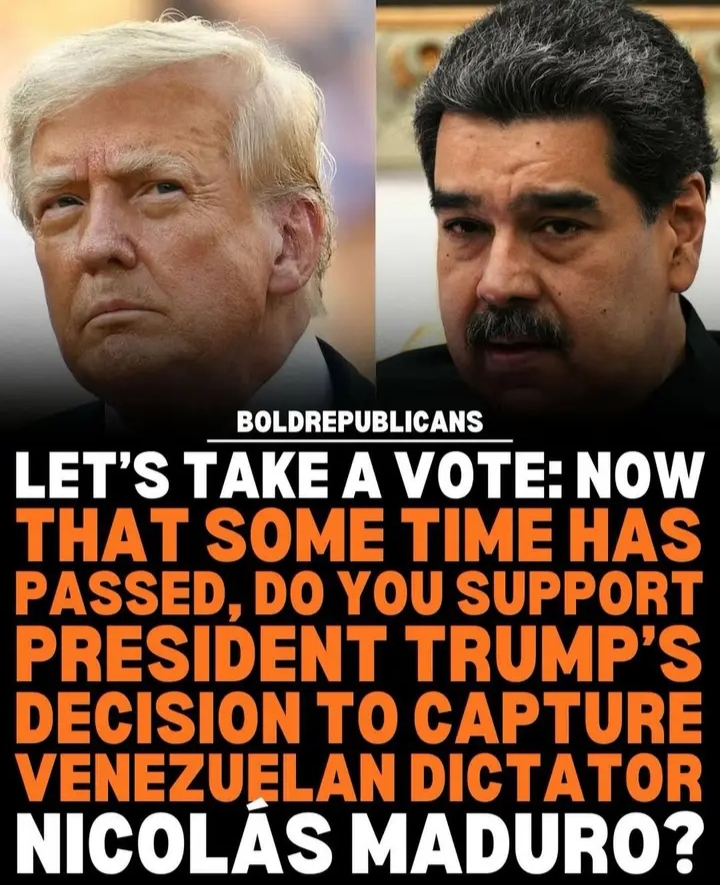
Time to revisit the question. With some distance and perspective, do you support Donald Trump’s decision to move against Venezuelan strongman Nicolás Maduro?
Supporters argue it was a firm stand against authoritarianism, corruption, and human rights abuses. Critics warn about escalation and foreign entanglements. Either way, it highlights a broader debate about America’s role in confronting dictators abroad.
Revisiting Trump’s Venezuela Policy: A Balance Sheet
Nearly a year after a dramatic escalation in U.S.–Venezuela relations, the decision by former U.S. President Donald Trump to move militarily against Venezuelan President Nicolás Maduro remains one of the most controversial foreign policy actions of the decade. What began as an intensification of sanctions and naval pressure has culminated — as of early January 2026 — with U.S. forces capturing Maduro and flying him out of Caracas. Trump publicly declared that the United States would oversee Venezuela’s transition to new leadership.
Supporters of the move celebrate it as a resolute stand against a leader they view as an authoritarian kleptocrat. Trump and his allies framed Maduro as deeply complicit in drug trafficking and responsible for severe human rights abuses, arguing that removing him disrupts harmful networks and affirms a tough U.S. posture against oppressive regimes. Some supporters also see the operation as vindication of a long-standing policy of “maximum pressure” and a deterrent to future dictatorships.
In addition, imposing an oil tanker blockade and striking vessels alleged to be linked to trafficking were pitched as part of a broader effort to protect American security interests — though evidence tying Venezuela directly to U.S. drug flow remains disputed.
Critics, however, warn of deep legal and ethical problems. Prominent international law experts describe the capture of a sitting head of state without UN authorization as a clear violation of Venezuela’s sovereignty and the UN Charter, raising concerns about dangerous precedents for future interventions.
Many governments across Latin America and beyond have echoed these sentiments, decrying unilateral military action as destabilizing and contrary to regional norms of non-interference. Condemnations have come not only from left-leaning capitals but from more centrist states urging peaceful, diplomatic pathways to address Venezuela’s political crisis.
Debate also persists within the United States: some lawmakers champion the assertiveness as necessary leadership, while others warn it bypassed Congress and traditional checks, risking long-term entanglement and undermining U.S. credibility.
And what about Venezuela itself? Venezuelans have mixed reactions. Some who opposed Maduro’s rule see the removal as a potential break from repression, but many fear that foreign military intervention simply swaps one form of control for another, without guaranteeing democratic reform. Meanwhile, the country grapples with internal transitions, contested leadership, and debates over amnesty laws and future elections.
—
Where Does That Leave Us?
Trump’s action sharpened a longstanding debate: should the U.S. confront authoritarian leaders abroad, even if it means military force and direct intervention? For supporters, it was a firm stand against corruption and cruelty. For detractors, it was an overreach that threatens international norms and fuels regional instability.
Where you stand today may depend on how you weigh justice and deterrence against sovereignty and legal norms — and whether you believe that change imposed from the outside can ever be truly positive for a nation’s people.

Erika Kirk Insults Taylor Swift: “Sit down, you 36-year-old pop star” — But Her Response Shocked the Entire Nation

🚨 BREAKING: Trump Blindsided as Dormant Controversy Reignites at Pivotal Political Juncture — Inner Circle Scrambles to Steady the Message 🔥

🚨 BREAKING: Trump Faces Rising Political Pressure as Impeachment Talk Surges in Senate

SAD NEWS: Just 30 Minutes Ago, U.S. 43rd President George W. Bush Passed Away at the Age of 79 Because…

TRAGEDY STRIKES: 15 Minutes Ago, Shocking News Breaks Out from the White House — President Donald Trump Has Been Confirmed…

JUST IN; United States Secret Service Announces It Has Foiled a Sophisticated Assassination Attempt Targeting Donald Trump, Allegedly Planned as Retaliation for the Death of Iran Supreme Leader Ayatollah Ali Khamenei amid ongoing war

MAJOR UPDATE: THE INTERNATIONAL CRIMINAL COURT HAS JUST ISSUED AN ARREST WARRANT FOR DONALD TRUMP OVER THE PRE-MEDITATED MURDER OF THE SUPREME LEADER OF IRAN

BREAKING NEWS: U.S. Congress just PASSED a resolution that would BAR President Trump from launching ANY further military actions against Iran without explicit congressional AUTHORIZATION.

BREAKING NEWS: U.S. Senators have officially called for President Trump’s removal from office under the 25th amendment.

TRAGEDY STRIKES: 10 Minutes Ago, Shocking News Breaks from the White House — President Donald Trump Has Been Confirmed…

JUST IN; United States Secret Service Announces It Has Foiled a Sophisticated Assassination Attempt Targeting Donald Trump, Allegedly Planned as Retaliation for the Death of Iran Supreme Leader Ayatollah Ali Khamenei amid ongoing war
